


Page 86 - SQL
P. 86
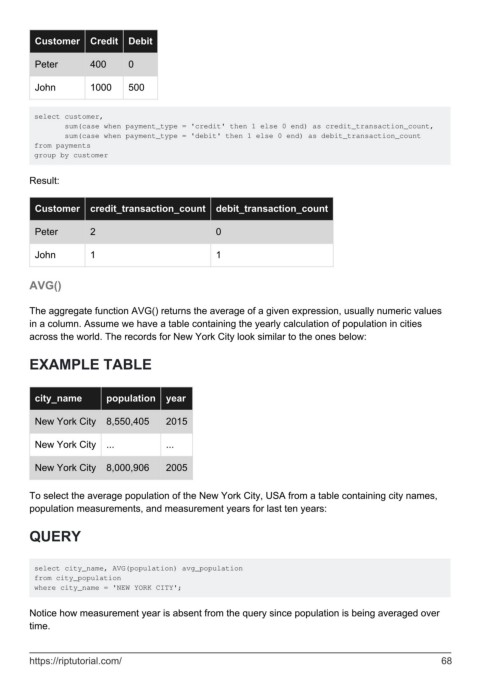
Customer     Credit    Debit

          Peter        400       0


          John         1000      500


         select customer,
                sum(case when payment_type = 'credit' then 1 else 0 end) as credit_transaction_count,
                sum(case when payment_type = 'debit' then 1 else 0 end) as debit_transaction_count
         from payments
         group by customer


        Result:


          Customer     credit_transaction_count        debit_transaction_count

          Peter        2                               0


          John         1                               1


        AVG()


        The aggregate function AVG() returns the average of a given expression, usually numeric values
        in a column. Assume we have a table containing the yearly calculation of population in cities
        across the world. The records for New York City look similar to the ones below:


        EXAMPLE TABLE


          city_name        population     year


          New York City    8,550,405      2015

          New York City    ...            ...


          New York City    8,000,906      2005


        To select the average population of the New York City, USA from a table containing city names,
        population measurements, and measurement years for last ten years:


        QUERY


         select city_name, AVG(population) avg_population
         from city_population
         where city_name = 'NEW YORK CITY';


        Notice how measurement year is absent from the query since population is being averaged over
        time.


        https://riptutorial.com/                                                                               68

