


Page 76 - SQL
P. 76
Use HAVING with Aggregate Functions


        Unlike the WHERE clause, HAVING can be used with aggregate functions.

              An aggregate function is a function where the values of multiple rows are grouped
              together as input on certain criteria to form a single value of more significant meaning
              or measurement (Wikipedia).


        Common aggregate functions include COUNT(), SUM(), MIN(), and MAX().


        This example uses the Car Table from the Example Databases.


         SELECT CustomerId, COUNT(Id) AS [Number of Cars]
         FROM Cars
         GROUP BY CustomerId
         HAVING COUNT(Id) > 1

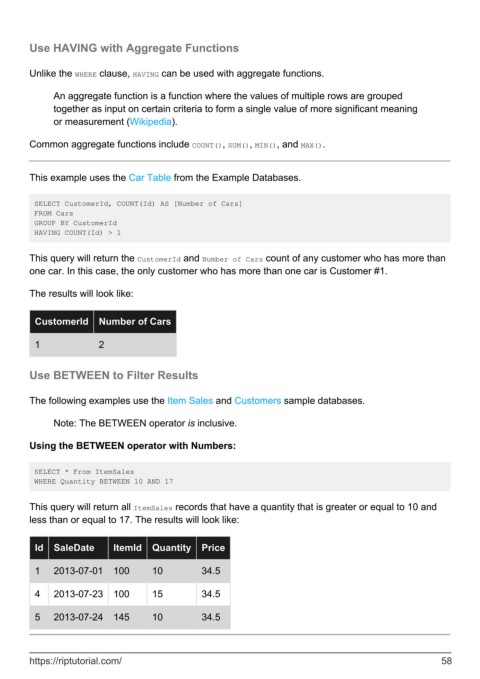
        This query will return the CustomerId and Number of Cars count of any customer who has more than
        one car. In this case, the only customer who has more than one car is Customer #1.


        The results will look like:


          CustomerId     Number of Cars


          1              2


        Use BETWEEN to Filter Results


        The following examples use the Item Sales and Customers sample databases.

              Note: The BETWEEN operator is inclusive.

        Using the BETWEEN operator with Numbers:


         SELECT * From ItemSales
         WHERE Quantity BETWEEN 10 AND 17


        This query will return all ItemSales records that have a quantity that is greater or equal to 10 and
        less than or equal to 17. The results will look like:


          Id  SaleDate       ItemId    Quantity    Price


          1   2013-07-01     100       10          34.5


          4   2013-07-23     100       15          34.5

          5   2013-07-24     145       10          34.5


        https://riptutorial.com/                                                                               58

