


Page 170 - SQL
P. 170
SELECT Fname, LName, ManagerFirstName
         FROM Employees
              NATURAL JOIN
              ( SELECT Id AS ManagerId, Fname AS ManagerFirstName
                FROM Managers ) m;


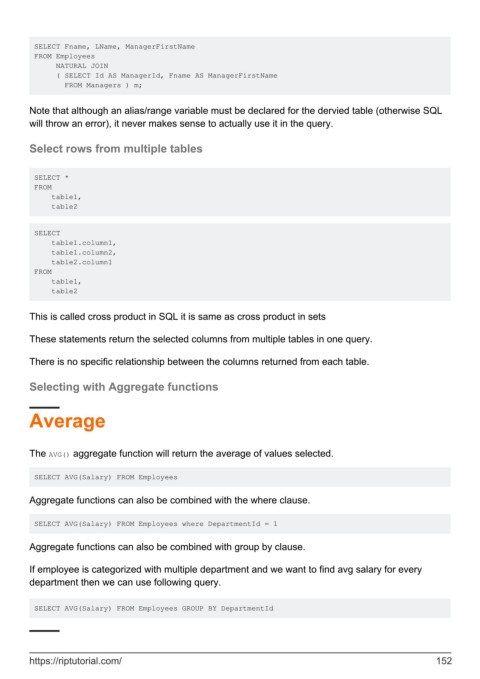
        Note that although an alias/range variable must be declared for the dervied table (otherwise SQL
        will throw an error), it never makes sense to actually use it in the query.


        Select rows from multiple tables


         SELECT *
         FROM
             table1,
             table2


         SELECT
             table1.column1,
             table1.column2,
             table2.column1
         FROM
             table1,
             table2


        This is called cross product in SQL it is same as cross product in sets


        These statements return the selected columns from multiple tables in one query.


        There is no specific relationship between the columns returned from each table.

        Selecting with Aggregate functions


        Average


        The AVG() aggregate function will return the average of values selected.

         SELECT AVG(Salary) FROM Employees


        Aggregate functions can also be combined with the where clause.


         SELECT AVG(Salary) FROM Employees where DepartmentId = 1

        Aggregate functions can also be combined with group by clause.


        If employee is categorized with multiple department and we want to find avg salary for every
        department then we can use following query.


         SELECT AVG(Salary) FROM Employees GROUP BY DepartmentId


        https://riptutorial.com/                                                                             152

